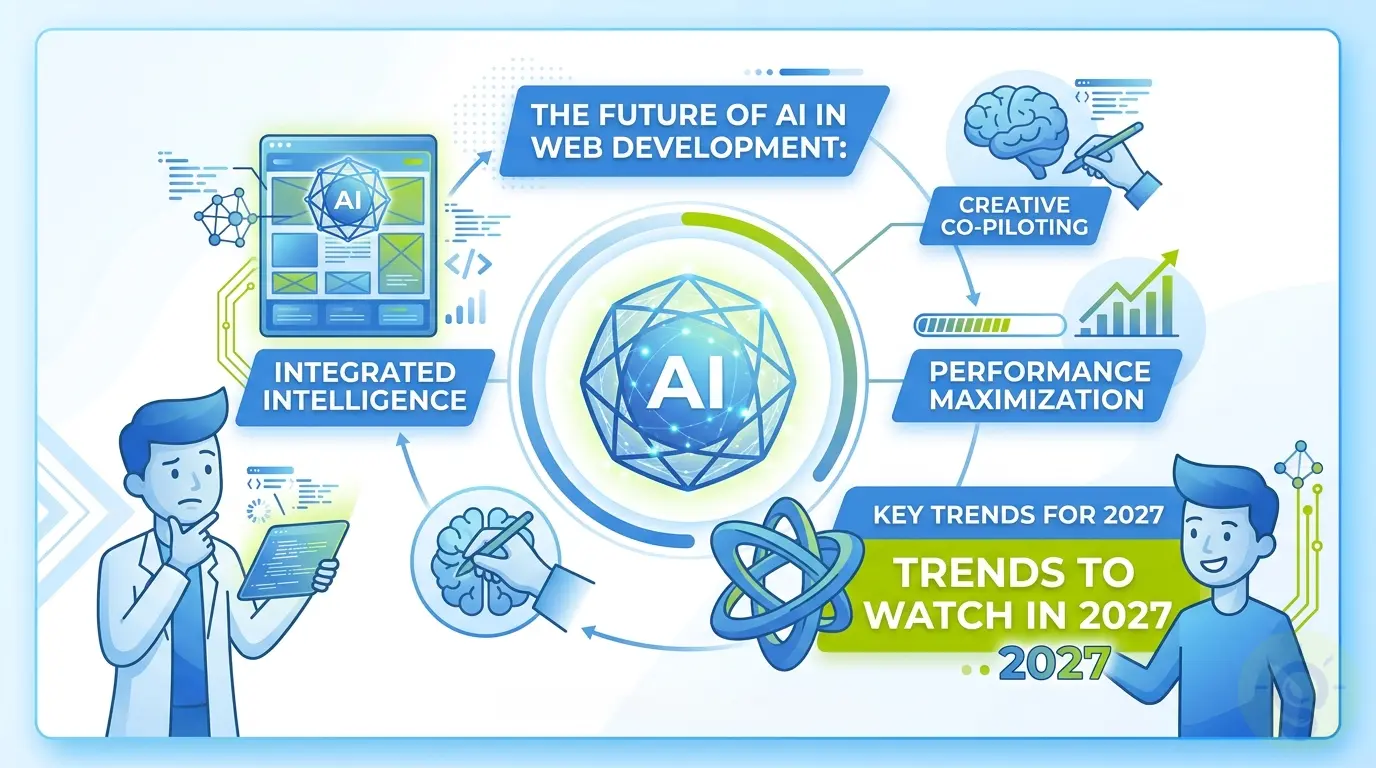
Introduction to the Next Era of Web Engineering
The landscape of web development is shifting under our feet. As we look towards 2027, Artificial Intelligence is no longer just a buzzword or a secondary tool—it is the foundational core of modern software engineering. From automated code generation to dynamic, self-optimizing user interfaces, the role of a web developer is evolving from a coder to a strategic architect.
In this comprehensive guide, we will explore the most disruptive AI trends reshaping the web development industry, how businesses can leverage these technologies, and what it means for the future of digital experiences.
1. AI-Driven Code Generation & Review
Gone are the days of writing boilerplate code from scratch. Advanced AI models, like the next iterations of Copilot and Gemini, are capable of generating entire functional modules based on plain English prompts. But it doesn't stop at generation.
"By 2027, over 80% of routine coding tasks will be automated by AI, allowing developers to focus entirely on system architecture, security, and user experience logic."
These tools now integrate seamlessly into CI/CD pipelines, automatically reviewing pull requests, identifying security vulnerabilities before they are merged, and suggesting performance optimizations in real-time.
2. Hyper-Personalized User Interfaces (UI)
Static web design is becoming obsolete. AI algorithms now analyze user behavior, preferences, and engagement metrics in real-time to generate a hyper-personalized UI. This means two different users visiting the same SaaS platform might see entirely different layouts optimized for their specific workflow.
- Dynamic Color Schemes: Adjusting contrast and colors based on the user's ambient lighting and visual preferences.
- Predictive Navigation: Reorganizing menus to highlight features the user is most likely to need at that exact moment.
- Contextual Content: Rewriting copy on the fly to match the user's reading level and industry jargon.
3. Automated SEO and Content Strategy
Search Engine Optimization is shifting from manual keyword stuffing to semantic AI analysis. Modern platforms use AI to continuously crawl competitor websites, identify content gaps, and automatically optimize on-page elements.
AI tools can now predict search trends months in advance, automatically generating draft content and schema markups to ensure your website ranks before the competition even knows the trend exists.
4. Self-Healing Web Applications
Downtime costs businesses millions. Enter Self-Healing Architecture. Using predictive AI, servers can detect memory leaks, infinite loops, and potential crashes before they happen. The AI can automatically restart microservices, scale server resources during sudden traffic spikes, and even rewrite flawed SQL queries on the fly to prevent database locks.
Conclusion: The Architect Developer
The future belongs to the "Architect Developer"—engineers who understand how to orchestrate multiple AI agents to build robust, scalable, and personalized web applications. Embracing these AI trends in 2027 isn't just about staying ahead of the curve; it's about survival in a hyper-competitive digital ecosystem. Thank You!